- Have any questions?
- info@vivart-x.com


Arvina
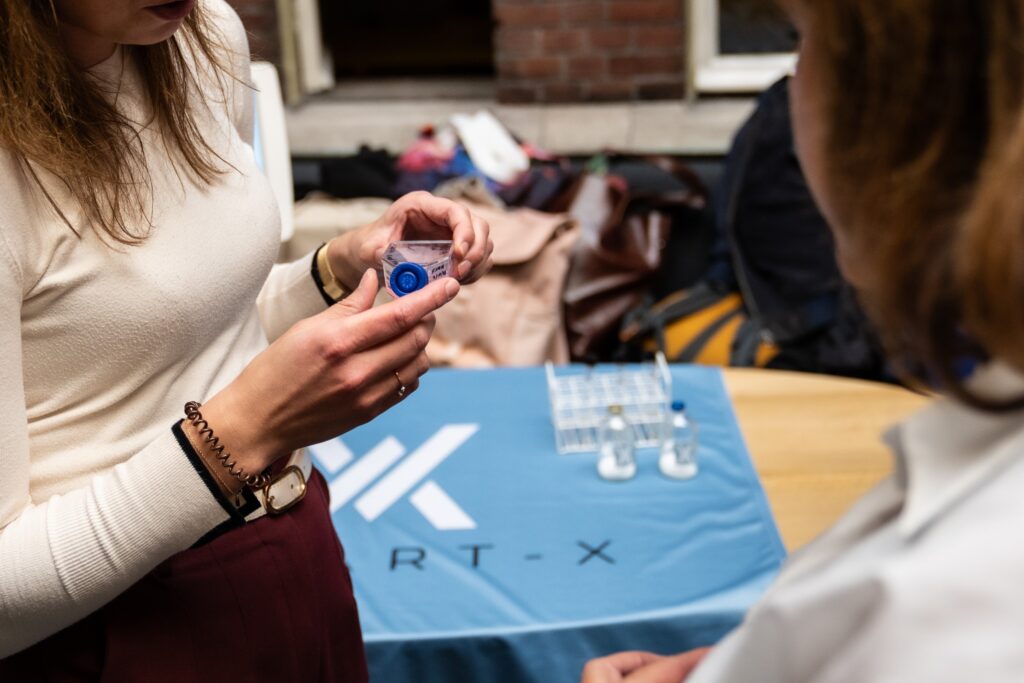






VivArt-X is developing a synthetically biodegradable biomaterial designed as a solution for breast reconstructive surgery for women after breast cancer. Approximately one in seven women will develop breast cancer during their lifetime. In the Netherlands, this concerns around 18,000 patients annually, of whom two out of three require partial or complete breast amputation.
There is a strong need for an effective breast reconstruction method that improves the quality of life of breast cancer patients without causing physical or psychological discomfort.
Fat grafting is an emerging reconstructive technique in which the patient’s own fat tissue is used. While this approach reduces the need for extensive and complex surgical procedures, 50 -60% of transplanted fat cells do not survive in the months following transplantation due to insufficient attachment and vascularization. This results in volume loss and often requires additional surgical interventions.
The objective of the Arvina project is to develop an improved, personalized breast reconstruction treatment for patients undergoing breast-conserving surgery (lumpectomy). The solution aims to be more effective, cost-efficient, less invasive and safer, thereby improving patients’ quality of life and reducing healthcare costs.
Arvina is being developed by VivArt-X in collaboration with Eindhoven University of Technology (TU/e) and the Smart BioMaterials Consortium (SBMC).
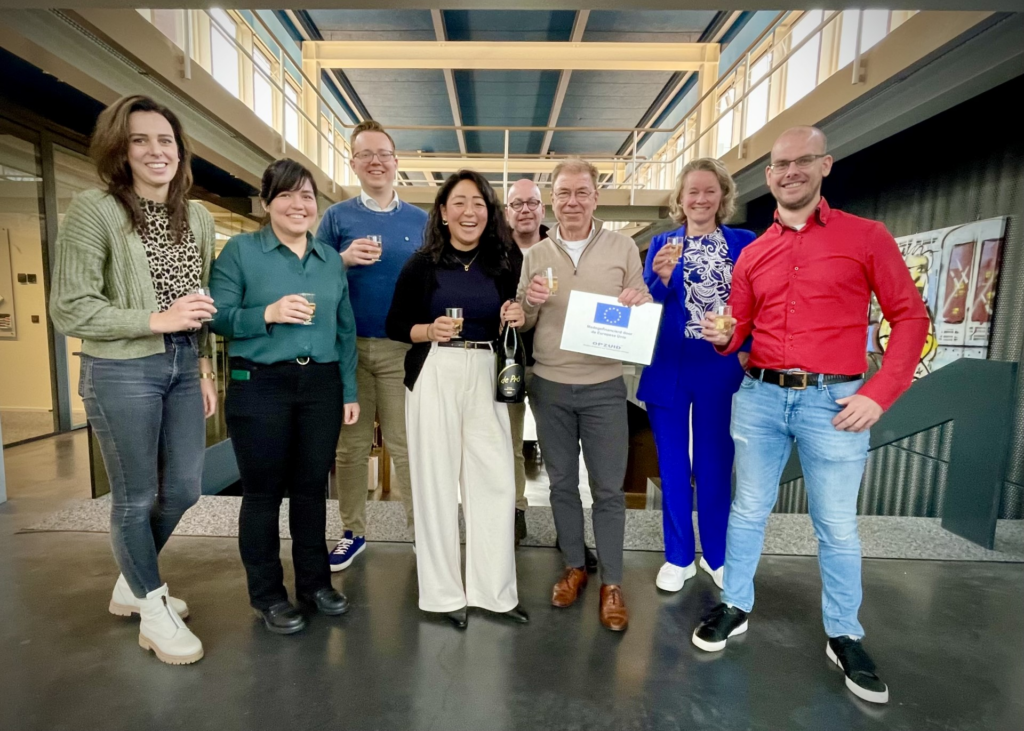
The Arvina project has been designated as a strategic EU project within the OPZuid 2021–2027 programme. This distinction is awarded to only a limited number of projects that make a substantial contribution to a smarter and greener Europe.
The designation recognises Arvina’s strategic relevance and its potential to deliver meaningful technological and societal impact. It underscores the project’s role in strengthening innovation capacity and advanced technology development in the Province of Noord-Brabant.
By the Province of Noord-Brabant
By collaborating partners
By EU subsidy program OPZuid
The project focuses on the development of a temporary matrix for transplanted fat cells, enabling improved cell attachment and survival. This reduces complications and the number of required surgical interventions. As a result, the quality of life of women opting for personalized breast reconstruction is significantly improved.
An amount of 1.4 million euros has been reserved for the project. Fifty percent of the costs are borne by the collaborating partners. Thirty-five percent comes from the European subsidy programme OPZuid, and the Province of Noord-Brabant accounts for the remaining 15 percent.